An optimistic future needs somewhere to walk
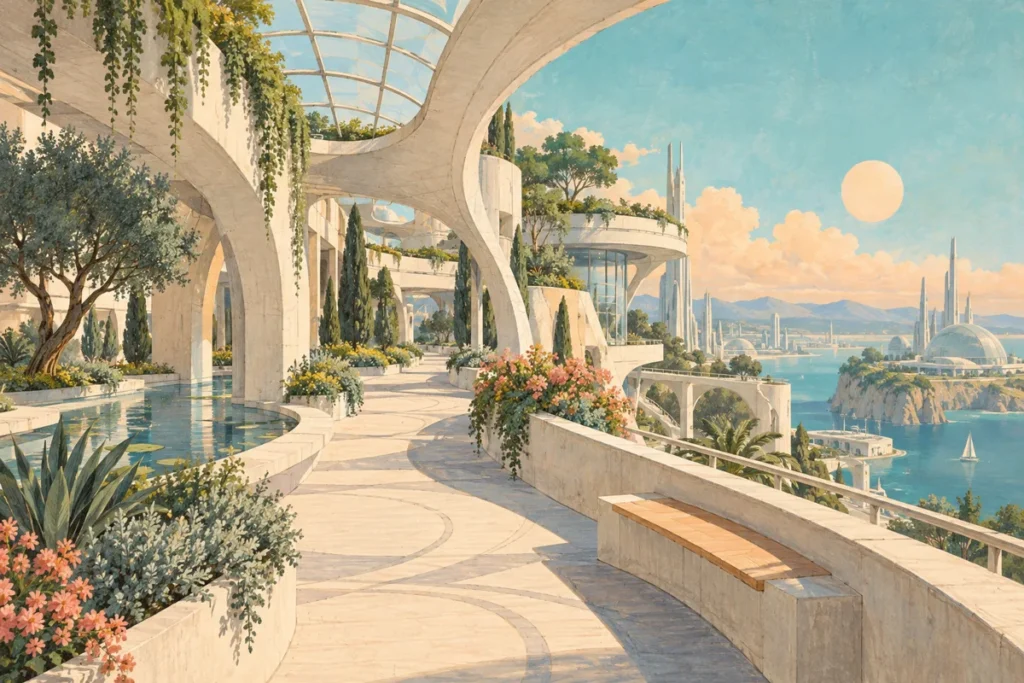
The easiest way to draw a future city is to change its skyline. Add a curve, suspend a road, put a garden high above the ground. The harder question begins at street level: what can an ordinary person do there on an ordinary day?
An optimistic setting becomes more convincing when its pleasures are usable. A bench with shade, a route that does not require a purchase, a doorway that welcomes different bodies: these details can communicate a social idea without a speech explaining the society. They also create places where a film can stage encounters rather than merely display architecture.
Follow one small journey
Imagine someone carrying a bag from a transit stop to a public garden. Where do they pause? How do they know which way to go? What happens if the obvious route is unavailable? This is a speculative design exercise, not an accessibility assessment of an actual building. Its purpose is to make the imagined world answer to more than a distant camera.
Conflict need not disappear from such a place. A public space can be hopeful and still contain maintenance, disagreement or bad weather. In fact, a setting that acknowledges ordinary work may feel more generous than one kept immaculate by unexplained magic.
Our original cover illustration proposes a sunlit walkway rather than reproducing a location from a film. It is an invitation to examine scale, shelter and shared space. The interesting future is not simply the one we can look at. It is the one in which a scene of everyday life can plausibly unfold.